
If you run a small business, most link building advice seems written for someone else: national brands, PR agencies, and content teams that publish daily. Meanwhile, you are answering customer emails and trying to find an hour for marketing.
The good news is that small businesses have advantages large companies struggle to copy. You likely know your community, suppliers, and customers personally, and you have specialist expertise and first-hand insight into what customers ask. Those assets are exactly what earns relevant links.
This guide covers how to build backlinks with limited time and budget, where to find realistic opportunities, and what to avoid. The goal is not volume. It is earning the links that make sense for your business.
What Is Link Building for Small Businesses?
Link building is the process of earning links from other websites to yours. For a small business, that usually means getting mentioned and linked by organizations, publications, partners, and communities connected to what you do.
Backlinks can help in several ways:
- Discovery: Google says it uses links to find new pages to crawl and as a signal when determining the relevancy of pages, as described in its documentation on crawlable links.
- Referral traffic: People click links and arrive already interested.
- Brand exposure and relationships: A mention on a respected site introduces you to its audience and often to new partners.
- Search visibility: Links are one of many signals that can contribute to how pages perform in search.
Backlinks do not automatically improve rankings. Google does not publish how much any individual link counts, and a link from an unrelated site in an odd context is unlikely to help much. A link from your county’s builders association to your roofing company makes sense to readers. A link from a random overseas gaming blog does not.
Why Link Building Matters for Growing Websites
For a growing website, links are one piece of a larger system. Content gives people something worth finding, technical SEO keeps pages crawlable and fast, on-page SEO clarifies what each page covers, and internal linking connects your site. Backlinks and brand mentions add outside evidence that others find your business credible.
When one piece is missing, the others work harder for less. Links pointed at slow, thin, or confusing pages rarely deliver their full value. Before spending significant time on outreach, make sure your key pages are in good shape, either through your own review or with help from a provider of SEO Services who can see how links fit into the rest of your small business SEO.
Set Realistic Link Building Goals
Small businesses should set goals based on their own market, not on the backlink counts of large enterprises. A regional accounting firm does not need the same link profile as a national tax software company, because it is not competing for the same searches.
Realistic goals might include:
- Increasing the number of relevant referring domains (unique websites linking to you)
- Earning mentions from industry or local publications
- Building referral traffic from sites your customers read
- Getting a useful guide or tool cited by other websites
- Becoming a recognized source in your niche
A useful goal is specific and measurable, such as: “Earn links from five relevant local or industry websites to our service pages and new pricing guide this quarter.” Five links from organizations your customers trust can do more than fifty from sites nobody reads.
Start With the Links You Can Earn Naturally
Many small businesses already have link opportunities they have never claimed. Start by listing every organization you have a real relationship with:
- Business associations and professional memberships
- Chambers of commerce and local business groups
- Suppliers, manufacturers, and vendors that list retailers, installers, or partners
- Complementary businesses you already refer customers to
- Community organizations, charities, and schools you support
- Events where you have spoken, exhibited, or volunteered
- Awards, certifications, and industry profiles with member directories
Check whether each one mentions you and, if so, whether it links. Often a quick email to update a member listing or partner page is all it takes.
Sponsorships deserve a note. Supporting a local 5K or youth soccer league is a legitimate business activity. According to Google’s guidance on qualifying outbound links, links given in exchange for payment, such as sponsorships, should use rel=”sponsored” (or rel=”nofollow”). That is fine. Sponsor for the visibility and goodwill, and do not pay for links whose only purpose is to manipulate search rankings.
Audit Your Existing Backlinks
A simple audit shows you what you already have and where to focus next. Google Search Console’s Links report is free and shows the sites linking to you. Tools such as Ahrefs, Semrush, or Moz add detail, and most offer free or limited versions.
Review these areas:
- Existing referring domains: Which relevant sites already link to you?
- Lost links: Did a partner or directory remove a link after a redesign?
- Broken backlinks: Are other sites linking to pages on your site that now return errors? Redirecting those URLs to the right page can recover value.
- Unlinked mentions: Who mentions your business without linking?
- Suspicious links: Every site attracts some spam. Google’s disavow guidance says most sites will not need to disavow links, so this is usually a note to watch rather than a task.
- Pages that attract links: Which of your pages already earn links, and why?
If your one detailed FAQ page has attracted more links than your homepage, that tells you what kind of content your industry values.
Find Backlink Opportunities Through Competitor Research
Competitor backlink analysis shows which websites already link to businesses like yours. For a small business, it is a shortcut to finding opportunities you would otherwise miss.
- Identify realistic competitors. Choose businesses of similar size in your market, plus a few that rank well for the searches you care about.
- Find their referring domains using a backlink tool.
- Identify sites linking to more than one competitor. These have shown they link to your category.
- Review the pages receiving links. Is it the homepage, a guide, a tool, or a local event page?
- Look for patterns such as association listings, local news features, or supplier pages, and keep only those relevant to you.
- Create a better resource where appropriate, if a competitor earns links with a guide you could genuinely improve.
Use this research for ideas, not imitation. Some competitor links are paid, outdated, or not worth having.
Create Content That Small Businesses Can Actually Produce
You do not need a large editorial team to create linkable content. You need something useful that is hard to find elsewhere. Realistic formats include:
| Format | Small Business Example |
|---|---|
| Local guide | A pet groomer’s map of dog-friendly parks and trails in the county |
| Checklist or template | A bookkeeper’s year-end checklist for sole proprietors |
| Calculator | A fence contractor’s material and cost estimator |
| Comparison resource | A flooring store’s guide comparing vinyl plank, laminate, and hardwood |
| Customer survey | A bridal shop’s annual summary of trends it saw across appointments |
| Original data | A moving company’s anonymized data on the busiest moving weeks in its region |
Useful content does not have to be huge. A clear, accurate, two-page checklist can earn more links than a sprawling 5,000-word guide that repeats what everyone else has written. What matters is that it answers a real question well and stays current.
Turn Your Expertise Into Linkable Content
Your most valuable content idea is often something you know simply from doing the work every day. Large competitors may have bigger budgets, but they rarely have your hands-on perspective.
Look for material in lessons learned (“seven mistakes we see before a kitchen remodel”), shifts in customer questions, anonymized patterns from your appointments or orders, original processes you use, and your view on new regulations or local developments.
A small HVAC company that tracks which furnace issues it sees most often each winter has information a local reporter or home improvement blogger may want. Package it clearly, explain where it came from, and it becomes a resource other sites can reference.
Local Link Building Opportunities
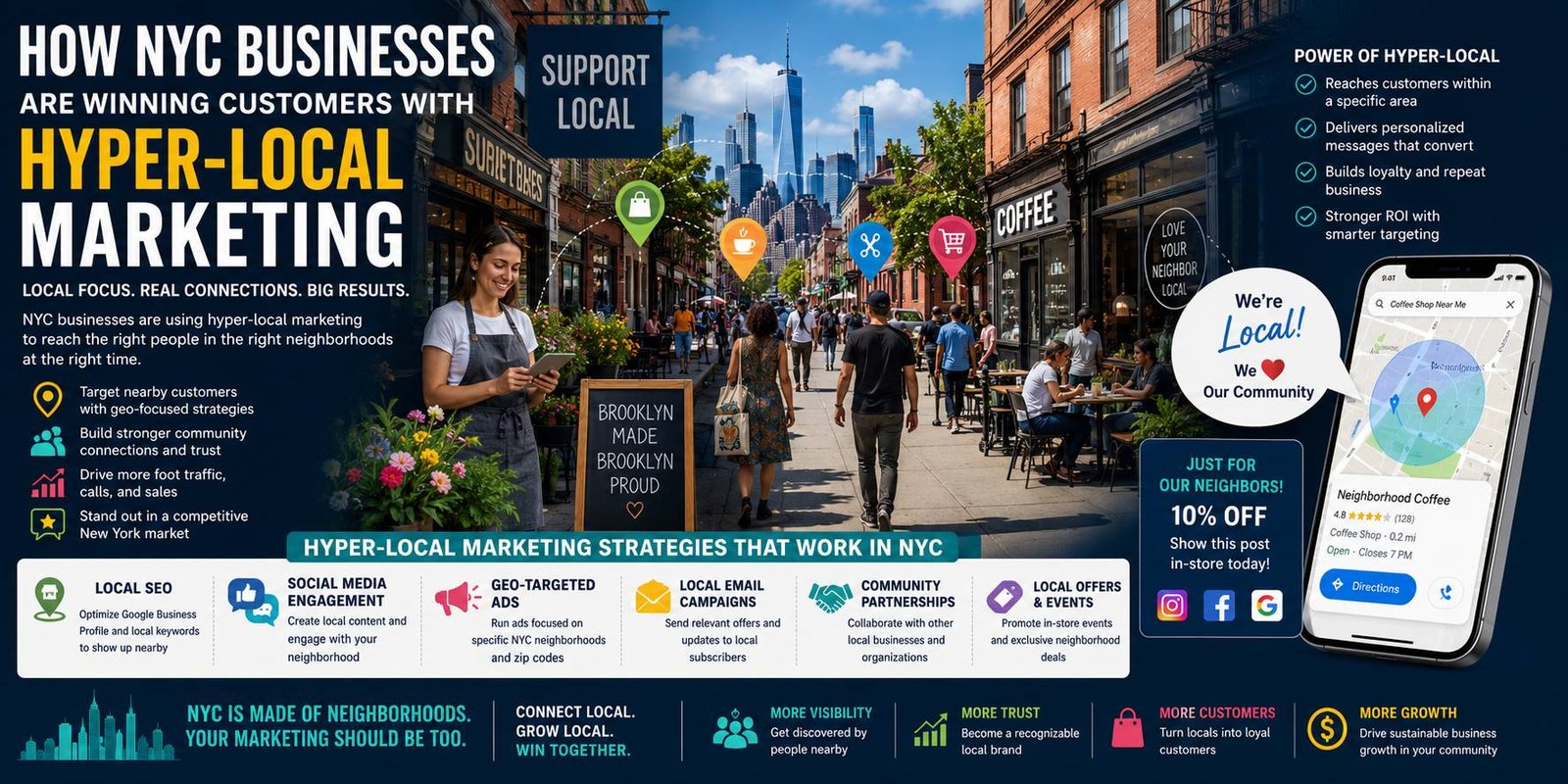
Local relevance is one of the few areas where small businesses often have an edge. A national chain cannot easily become part of your town’s community in the way you already are.
Local opportunities include:
- Local newspapers and community publications
- Chambers of commerce, business associations, and networking groups
- Community events, festivals, and fundraisers
- Nonprofits and community organizations you support
- City, county, and regional resource pages where your content is genuinely useful
- Local partnerships with complementary businesses
- Local universities, community colleges, and extension offices, where relevant
For example, a landscaping company that runs a free spring workshop on native plants at the public library may earn a listing on the library’s events page, a mention in a neighborhood newsletter, and a link from a local garden club. Link building for Local businesses works best when it reflects real community involvement, since those links also tend to reach the nearby customers you actually serve and support your broader local SEO.
Industry-Specific Link Building
Small businesses get the most from links within their own industry. An industry link reaches people who understand what you do, and it makes sense in context. Here is how the opportunities differ.
SaaS and Technology
Early-stage software companies can start with integration partners, since app marketplaces and partner directories often link to connected tools. Founder-written posts on specific technical problems travel well in developer and startup communities. Some startups eventually bring in a SaaS link building agency once they have product data worth pitching, but a founder’s direct expertise is usually the strongest early asset.
Ecommerce
Small online stores rarely get links to product pages on their own. Better opportunities come from the story behind the products: a maker’s profile on a supplier’s website, a feature in a niche lifestyle publication, inclusion in a relevant buying guide, or a care guide other sites reference. Ecommerce link building for a small shop often means creating those helpful informational pages and connecting them to category pages with internal links.
Professional Services and Law
Accountants, consultants, and attorneys can earn links through professional organizations, specialist publications, speaking at continuing education events, and offering expert commentary to local reporters. A solo attorney who writes a plain-English explainer on a new state law may be cited by community organizations and local news. Link building for lawyers also needs to respect state bar advertising rules, so outreach, directory listings, and sponsorships should be reviewed with those in mind.
Finance and Fintech
Small financial firms and fintech startups can contribute commentary to business publications, join professional associations for planners or accountants, and support financial literacy programs at local schools or libraries. Because financial topics affect people’s money, Link building for Finance and fintech depends on credentialed authors and compliance review more than on volume.
Health and Wellness
Clinics, therapists, and wellness businesses can earn links through professional organizations, community health events, and educational resources reviewed by qualified professionals. A physical therapy practice might offer an injury prevention guide to local high school athletic programs. Link building for Health and wellness requires accuracy, so pitches should avoid unsupported claims, which reputable editors reject and US advertising rules may prohibit.
Travel and Hospitality
Independent hotels, tour operators, and restaurants can work with tourism boards, convention and visitors bureaus, destination guides, and local event organizers. A bed-and-breakfast might publish a genuinely useful guide to off-season activities in its town that the local visitors bureau shares. Link building for Travel and hospitality often follows the calendar, since travel editors plan seasonal content months ahead.
Education and EdTech
Tutoring centers, course creators, and EdTech startups can offer free teacher resources, lesson plans, or study guides that educators share. Education associations, library resource pages, and education publications are natural prospects. Link building for Education and edtech also requires care with student data, so any research should use anonymized information and follow privacy laws such as FERPA and COPPA where applicable.
Guest Posting for Small Businesses
Guest posting makes sense when you have real expertise to share with an audience that overlaps with your customers. It does not make sense as a volume tactic.
To do it well:
- Find publications your customers or peers actually read.
- Read recent articles and contributor guidelines to understand their standards.
- Pitch a specific topic you are qualified to cover, not a generic one.
- Write original content with practical examples from your work.
- Build a relationship with the editor instead of treating it as a one-time transaction.
Google’s spam policies list links with optimized anchor text in articles, guest posts, or press releases distributed on other sites as an example of link spam. One thoughtful article in a respected trade publication beats dozens on sites that publish anything.
Digital PR for Small Businesses
Digital PR means offering journalists and publishers something newsworthy that may lead to editorial coverage and links. You do not need a PR department to do it.
Small businesses often have stories that larger companies cannot tell:
- Results from a short customer survey
- Anonymized trends from your own sales or service data
- Expert commentary on local news or a new regulation
- A local story, such as a new community program or a business milestone
- Proprietary insight into how an industry change affects customers
A single strong story can be picked up by more than one outlet. Keep your list small and relevant: local reporters, trade editors, and writers who have covered similar stories. Coverage is never guaranteed, and some articles mention a source without linking.
Resource Pages and Industry Directories
Resource pages and directories can be useful when they are maintained by credible organizations and serve a real audience. Good candidates include industry associations, trade groups, professional directories with membership standards, chambers of commerce, local business organizations, and niche resource pages that list helpful tools or guides.
Low-quality directories are easy to spot. They accept any business, list thousands of unrelated companies, have no editorial review, and often exist mainly to sell listings. Google’s spam policies name low-quality directory links as an example of link spam. A simple test: would a potential customer ever use this directory to find a business like yours? If not, skip it.
Broken Link Building for Small Businesses
Broken link building means helping a website fix a dead link by suggesting a relevant replacement.
- Find relevant resource pages in your industry or area.
- Identify broken links using a free browser extension or crawler.
- Decide whether your content genuinely replaces the missing resource.
- Create or improve the resource if necessary, but only if it fits your business.
- Contact the website owner with the location of the broken link.
- Suggest your page as one possible replacement.
The goal is to help the site owner keep their page useful. If the broken resource was about something you do not know or offer, move on.
Unlinked Brand Mentions
Websites sometimes mention your business, products, services, founder, experts, research, or content without linking. Set up free Google Alerts for your business name and founder’s name, and periodically search for your brand while excluding your own site, for example “Your Business Name” -site:yourdomain.com.
When a mention is relevant, such as a local article quoting you or a blog citing your guide, a short, friendly note asking whether they would add a link is reasonable. If the mention is incidental, let it go.
Build Relationships With Other Businesses
Many durable links come from ordinary business relationships with suppliers, partners, customers who run businesses, industry organizations, complementary businesses, professional groups, and event organizers.
A wedding photographer who works regularly with a venue, a florist, and a caterer might be featured on each of their “recommended vendors” pages because they genuinely recommend each other. That is different from a systematic “link to me and I’ll link to you” arrangement. Google’s spam policies name excessive link exchanges as a violation. Recommend businesses you actually work with and would send customers to.
Outreach for Small Businesses
You do not need outreach software. A spreadsheet and a clear process are enough:
- Find the right contact: The article’s author, the page owner, or the editor of that section.
- Research the page and have a genuine reason: A broken link, an unlinked mention, a gap your resource fills, or a relevant story.
- Personalize with substance: Reference the specific page and why your suggestion fits.
- Keep it short: A few sentences focused on their readers, not your SEO.
- Follow up once: A polite follow-up after about a week is reasonable.
- Track responses: Note who replied, what worked, and what did not.
Here is a realistic example from a small business owner:
Subject: Your spring lawn care article
Hi Karen,
I own a small lawn care company in Westfield and read your spring yard checklist in the Westfield Community News. One small thing: the link to the county’s soil testing information in step three now goes to an error page.
The extension office moved that page. We also put together a short guide on how to collect a soil sample for testing, which your readers might find helpful alongside it: [link]
Thanks for running the checklist either way.
Mike Alvarez
Alvarez Lawn Care
A Simple Link Building Outreach Template
Adapt this template to your situation, and rewrite it in your own voice each time:
Subject: [Specific page or topic]
Hi [Name],
I read your [article or page title] about [topic]. [One specific, honest observation or the issue you noticed.]
I run [business] in [location or industry], and we recently published [resource], which covers [what it helps readers do]. It might be a useful addition for your readers: [link]
No worries if it’s not a fit. Thanks for your time.
[Your name]
[Business name]
How Much Time Should a Small Business Spend on Link Building?
There is no universal number of hours. The right amount depends on your business size, industry, competition, content resources, existing relationships, whether you have marketing help, and what you want to achieve.
Consistency matters more than intensity. A manageable weekly rhythm might look like this, adjusted to your schedule:
- Check brand mentions and alerts.
- Research a few new prospects and add them to your spreadsheet.
- Send a small number of personalized outreach emails.
- Follow up on older emails.
- Spend some time improving one linkable resource.
For some owners that is a focused hour. Pick a rhythm you can sustain for months.
How to Prioritize Link Opportunities
With limited time, prioritization matters. Use this framework to decide where to start:
| Factor | Question to Ask |
|---|---|
| Relevance | Is the site connected to my industry or community? |
| Audience fit | Do its readers resemble my customers? |
| Website quality | Is it maintained, credible, and written for people? |
| Editorial fit | Would a link to my page make sense on this page? |
| Referral potential | Could this link send real visitors? |
| Relationship potential | Could this lead to ongoing collaboration? |
| Effort required | Is this a quick fix or a major project? |
| Legitimacy | Is there a genuine reason for them to link? |
Start with opportunities that score well on relevance and legitimacy and require modest effort, such as updating member listings or reclaiming unlinked mentions. Ten carefully chosen prospects will often produce more than hundreds of unrelated websites, because each one has a real reason to say yes.
Link Building on a Limited Budget
A small budget does not have to mean low-quality links. Most of the tactics in this guide, including existing relationships, original expertise, small research projects, community involvement, expert contributions, useful resources, targeted outreach, and industry networking, cost time rather than money.
Where money is spent, spend it on things with value beyond SEO, such as association membership, a community sponsorship, or better content, rather than on links sold by the piece.
What Small Businesses Should Not Do
Shortcuts are tempting when time is tight, but most of them conflict with Google’s spam policies and rarely help a small business in any lasting way. Avoid:
- Buying links meant to manipulate rankings. Paid placements are acceptable only when the links are qualified with rel=”sponsored” or rel=”nofollow”.
- Link farms and private blog networks.
- Automated backlink tools and spam directories.
- Comment and forum spam.
- Mass guest posting and excessive link exchanges.
- Irrelevant backlinks from sites unrelated to your business.
- Exact-match anchor text manipulation, such as asking every site to link with “best plumber in Dallas.”
- Low-quality sponsored link schemes sold as “guaranteed dofollow” placements.
Google states that sites violating its spam policies may rank lower or not appear in results at all. If an offer sounds fast, cheap, and guaranteed, it is usually worth skipping.
How to Measure Link Building Success
Measure link building by relevance and business impact, not by link count. A hundred low-quality links can look impressive in a report while doing nothing for your business.
Useful measures include:
- Relevant referring domains: New unique sites linking to you that fit your industry or area.
- Link quality: Placement, context, and whether the link is editorial.
- Referral traffic: Visitors arriving from links, tracked in Google Analytics or a similar tool.
- Organic visibility: Impressions and clicks for key pages in Google Search Console.
- Mentions, coverage, and content performance.
- Leads, where you can reasonably connect them to referral or organic visits.
- Relationships with new partners, editors, and organizations.
Search performance changes for many reasons, including content updates, competitors, and seasonality, so look at trends over months.
A Practical 90-Day Link Building Plan for Small Businesses
This framework is a starting point. Adjust the pace to your time and resources.
Month 1: Research and Foundation
- Run a basic backlink audit in Google Search Console and one other tool.
- Review three to five realistic competitors for link opportunities.
- List every existing relationship that could lead to a mention.
- Find content gaps and plan one or two resources you can realistically create.
Month 2: Content and Outreach
- Create or improve your first linkable resource.
- Update member listings and partner pages.
- Send personalized outreach about mentions, broken links, and relevant resources.
- Pitch one or two expert contributions to relevant publications.
- Contact local or industry organizations about events or resources.
Month 3: Refinement and Expansion
- Follow up on open conversations.
- Review new links for relevance, placement, and referral traffic.
- Identify which outreach angles got responses.
- Plan your next resource based on what worked.
- Deepen relationships with editors and organizations who responded.
Results in the first 90 days vary widely. Treat this period as a way to build a repeatable process, not as a test that should produce a specific number of links.
When Professional Link Building Support Makes Sense
Many small businesses handle link building themselves at first. Outside help can make sense when your business is growing faster than your marketing time, when you are entering a competitive market, or when you have good assets but no one to promote them. Common areas of support include prospect research, content strategy, link qualification, outreach and follow-ups, digital PR, and backlink monitoring.
If you evaluate providers of Link Building Services, ask how they find and vet prospects, whether they buy placements, what outreach looks like, and whether you will see every link they earn. A trustworthy provider will not promise specific rankings or link counts.
Frequently Asked Questions
How can a small business get backlinks?
Start with existing relationships such as associations, suppliers, partners, and community organizations. Then create useful resources based on your expertise, reclaim unlinked mentions, and reach out to relevant local and industry websites.
How many backlinks does a small business need?
There is no set number. Compare your relevant referring domains with the businesses ranking for your target searches, and focus on closing meaningful gaps with relevant links rather than chasing a total.
Are backlinks important for small business SEO?
They can be. Google uses links as one signal among many, and relevant links can also bring referral traffic and visibility. They work best alongside strong content and technical health.
How can I build backlinks without paying for them?
Use your relationships, expertise, and community involvement. Useful guides, local resources, expert commentary, broken link outreach, and unlinked mention requests cost time rather than money.
Are local directories still useful for SEO?
Credible local directories, such as your chamber of commerce or reputable industry directories, can help customers find you and support consistent business information. Mass submissions to low-quality directories are not worth the time.
Is guest posting suitable for small businesses?
Yes, in moderation. Contributing expert articles to relevant publications your customers read can build credibility and referral traffic. Avoid publishing on sites that accept any topic or charge for placement.
How long does link building take for a small business?
Plan in months, not weeks. Relationships, content discovery, and search engine processing all take time, and impact varies by market.
What websites should small businesses target for backlinks?
Target sites connected to your industry, your community, or your customers: associations, local publications, suppliers, partners, niche blogs, and resource pages where your content genuinely helps readers.
Final Thoughts
Small businesses do not need to match large competitors backlink for backlink. Your strengths are relevance, expertise, local relationships, industry connections, and knowledge of your customers. Build on those with useful content, targeted outreach, and consistent prospecting, and the links you earn will make sense to the people who see them.
If you are starting now, pick three actions for this week: list every organization you already work with, check Google Search Console for your current links, and choose one question your customers ask that deserves a better answer on your website. That is enough to begin a link building strategy you can sustain.
Published by BizNY.